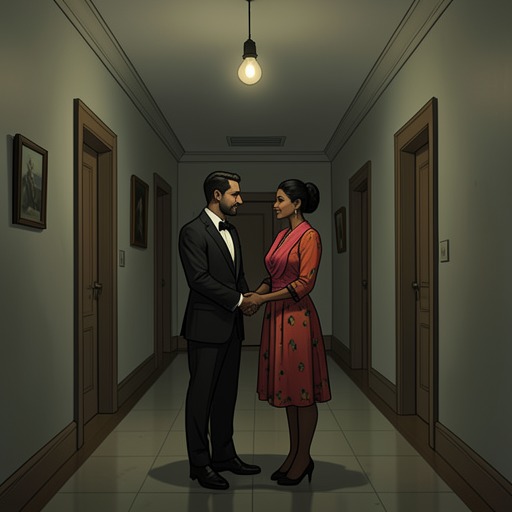
Peter abandons his date with Lorna
The RadleysPeter Radley abandons his planned date with Lorna Felt while waiting in a pub car park, choosing to return home rather than act on the attraction and temptation that have brought him there. The decision matters because it turns an anticipated evening of intimacy into a moment of restraint: Peter still loves Helen Radley, fears what desire may awaken in him, and ultimately lets a possible glimpse of Rowan Radley redirect him toward family duty.
Background and Stakes
Peter’s hesitation is rooted in a marriage that has lost something without erasing its history. He remembers how deeply he and Helen once loved each other, and how their affection made the drab, rainy streets of Clapham seem more romantic than Venice or Paris. He knows that something between them has changed, but does not know how to restore it. That contrast gives his meeting with Lorna its emotional charge: Peter is not simply choosing between two possible companions. He is acting in the space left by a love he still feels and believes Helen no longer returns.
The evening has already involved drinking Lorna’s blood. Peter’s earlier giddy happiness has disappeared by the time he sits in the car, leaving him with temptation without its pleasurable gloss. He imagines going into the pub, talking and laughing with Lorna, listening to its terrible music, and wondering after a couple of drinks whether the meeting is leading somewhere. He even anticipates that they might soon become physically intimate, perhaps in the car, at a Travelodge, or at number nineteen. These are possibilities he fears, not events that occur: the date has not yet begun, and the imagined prospect of Lorna’s nakedness panics him.
The Waiting in the Car
The car park makes Peter’s private indecision vulnerable to interruptions from the outside world. A couple arrive, and he recognizes the woman as Jessica Gutheridge, a card designer whom Helen once pointed out at a Christmas market in York. Peter thinks she may also attend Helen’s book group. He has never met her, and considers it unlikely that she would recognize him, but her presence makes the evening feel riskier. As the couple leave their car and head into the pub without looking his way, Peter sinks slightly in his seat. He also thinks Farley is too close and that they would have been better choosing somewhere farther away.
Rather than go inside, Peter reaches into the dashboard for The Abstainer’s Handbook, which he had taken from Rowan’s room without asking. He turns to its chapter on sex without blood, which offers techniques including controlled breathing, focusing on the skin, and methods intended to cancel blood-related responses. The advice recommends breathing through the mouth to limit sensory and imaginative stimulus if changes begin during foreplay or sex; if that fails, the abstainer should stop and say the mantra aloud. The handbook gives Peter a practical script for resisting a situation he has not entered, making his fear of intimacy inseparable from the discipline of abstention.
The Decision to Go Home
Peter stares back at the road as another car arrives and a bus passes a minute or two later. Through the bus glass, he is sure he sees Rowan’s forlorn face. The sight is uncertain: Peter wonders whether Rowan saw him and whether his son knows something, rather than learning either fact. But even as a possible glimpse, Rowan changes the balance of the scene. Peter is frightened by the thought, and what had been fluid pleasure becomes solid duty. He starts the engine and heads home instead of entering the pub.
His departure does not resolve the marriage or establish that Helen loves him. Peter’s own reasoning is stark: if he felt that Helen loved him back, he would not be there, with or without blood. He nevertheless leaves Lorna’s possible company behind. His decision is therefore neither evidence that desire has vanished nor a reconciliation with Helen; it is a refusal to follow temptation on this particular evening, shaped by enduring attachment and a sudden reminder of his son.
The Mantra and Its Significance
As he drives away, Peter wearily repeats, “I am Peter Radley,” followed by the declaration that he is in control of his instincts. The mantra converts the handbook’s general instruction into a personal assertion. Its weary delivery keeps the choice from appearing effortless: Peter has reached for guidance because he is afraid of what might happen, and leaving is the action through which he tries to make the words true.
The scene turns on a movement from anticipated pleasure to restraint. The possible encounter with Jessica Gutheridge sharpens Peter’s unease; the prospect of sex makes his fear explicit; and Rowan’s possible presence redirects him from private temptation toward responsibility. The event ends not with a conversation with Lorna or a change in Peter’s feelings for Helen, but with the car moving toward home and the abstainer’s mantra spoken aloud.